
Common boiler problems include pressure loss, leaks, strange noises and heating failures. Check external controls first; gas faults or repeated lockouts need a qualified Gas Safe registered engineer promptly.
A boiler that refuses to fire on a cold morning, loses pressure overnight or leaves the shower running cold can disrupt the whole household. Some boiler problems stem from timer, thermostat or pressure settings. Leaks, ignition failures and repeated lockouts need professional diagnosis. External checks can help narrow down the cause, but never open the casing or attempt gas repairs yourself.
Key Takeaways
- Check the thermostat, timer, power supply and boiler display before assuming a component has failed.
- Note pressure readings and recurring changes instead of repeatedly topping up the system.
- Record the exact error code and boiler model before contacting an engineer.
- Never remove the boiler casing or attempt internal gas repairs yourself.
- Use a suitably qualified Gas Safe registered engineer for gas appliance repairs.
- Treat a suspected gas leak or sounding carbon monoxide alarm as an emergency.
What Are the Most Common Boiler Problems (and How to Fix Them)?
Boiler faults can affect heating, hot water or both, and the same symptom can have several causes. Start with the visible controls and display, then use the signs below to identify when professional diagnosis is needed:
Boiler Not Turning On or Firing Up
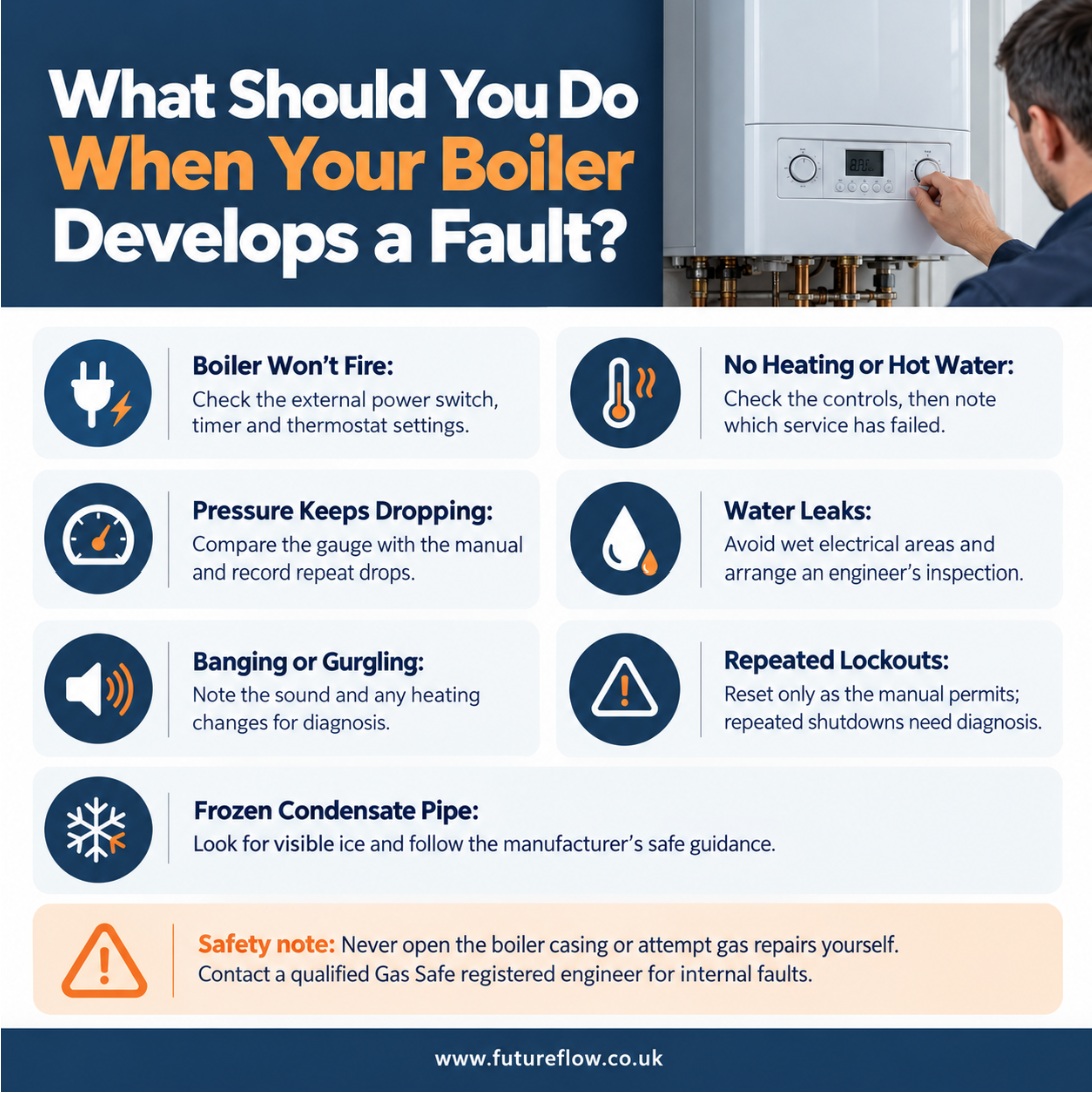
Check the external power switch, programmer, and thermostat settings first. A blank display may indicate a power issue, while failed ignition or a gas-supply problem needs professional attention.
Boiler Not Producing Heating or Hot Water
If both services fail, check the controls and displayed pressure before suspecting ignition or circulation faults. If heating works but hot water does not, or vice versa, the affected service may have a separate control or component fault.
Boiler Losing Pressure or Pressure Too High
Low pressure may follow a leak or radiator bleeding, while high or fluctuating pressure can indicate overfilling, a pressure-relief valve problem or an expansion-vessel fault. Compare the gauge with the manufacturer’s recommended range and note changes.
Boiler Leaking Water
Water beneath the boiler, around pipe connections or from an external discharge pipe can have different causes, including damaged seals or pressure-related faults. Avoid contact with wet electrical equipment and arrange an engineer to investigate.
Boiler Keeps Switching Off, Resetting or Going Into Lockout
Repeated shutdowns can be triggered by low pressure, overheating, ignition failure or a safety sensor detecting a fault. Follow the manual’s reset instructions only where permitted; repeated lockouts need professional diagnosis rather than repeated resets.
Boiler Making Banging, Whistling or Gurgling Noises
Gurgling may indicate trapped air or poor circulation, while banging and whistling can point to restricted water flow, limescale or component faults. Persistent or new noises warrant investigation, particularly if heating performance has also changed.
Boiler Showing an Error Code or Controls Not Responding
Record the exact error code and check the manufacturer’s manual for its stated meaning. Confirm the thermostat and timer settings, but do not remove the casing to investigate sensors, wiring or internal components.
Boiler Condensate Pipe Frozen
During freezing weather, ice can block an external condensate pipe and stop the boiler from operating. Gurgling, an error code or loss of heating and hot water may provide clues. Check only what is safely visible and follow your boiler manufacturer’s guidance.
Boiler Short Cycling
Short cycling occurs when a boiler repeatedly starts and stops over brief periods instead of completing a normal heating cycle. Controls, restricted circulation or a boiler that is too large for the property’s heating demand may contribute.
A University College London study monitored gas boilers in four UK homes for over a year and found that most operating periods lasted under ten minutes. The UCL research on boiler operation identified frequent on/off cycling and boilers struggling to reduce their output to match heating demand. These findings show that short operating periods occur in real homes, although an engineer must establish the cause in an individual system.
What Can Go Wrong with Radiators and Central Heating?
Radiator problems can come from trapped air, sludge, valves, heating controls or circulation through the wider system. Notice which radiators are affected and where they remain cold, as this can help narrow down the likely cause.
Radiators Not Heating Evenly
A radiator that is cold at the top may contain trapped air, while cold patches at the bottom can indicate sludge or restricted circulation. Recurring problems may need an engineer to assess cleaning or balancing.
One Radiator Not Getting Hot
If other radiators work normally, check whether the affected radiator’s valve is open and the heating controls are set correctly. A stuck valve, trapped air or poor system balance may restrict heat to that radiator.
Radiators Taking Too Long to Heat
Slow warm-up can result from timer settings, low heating output, circulation problems or heat loss from the room. Check the heating programme and thermostat settings before arranging further diagnosis.
Radiator Leaks or Strange Noises
Water around a valve may indicate a leaking connection or corrosion. Ticking sounds can occur as pipes expand while warming, but persistent gurgling may point to trapped air or circulation problems that need attention.
Central Heating or Underfloor Heating Not Working Properly
If radiators or underfloor heating cannot reach the set temperature, check the thermostat, programmer and any zone controls. Faulty valves, pumps or circulation problems may require an engineer to inspect the heating circuit.
What Causes Hot Water Problems in Combi Boilers?
A combi boiler that produces no hot water while heating still works may have:
- A faulty flow sensor
- Diverter valve
- Or hot-water heat exchanger.
These components help the boiler detect demand and direct heat to the correct service.
If hot water turns cold during a shower, a component fault or changing water demand may be involved. Weak flow at several hot taps can point to low mains flow or limescale restricting the heat exchanger, particularly in hard-water areas. If the problem occurs only when several taps or showers run together, the available hot-water flow may be insufficient for the combined demand.
Check the hot-water temperature setting and consult the boiler manual. Internal faults need a Gas Safe registered engineer.
What Can You Safely Check Before Calling a Boiler Engineer?
A few external checks can help identify a settings issue or give an engineer useful information. Follow your boiler manufacturer’s instructions and never remove the casing, dismantle pipework or attempt internal gas repairs.
Checking Boiler Pressure
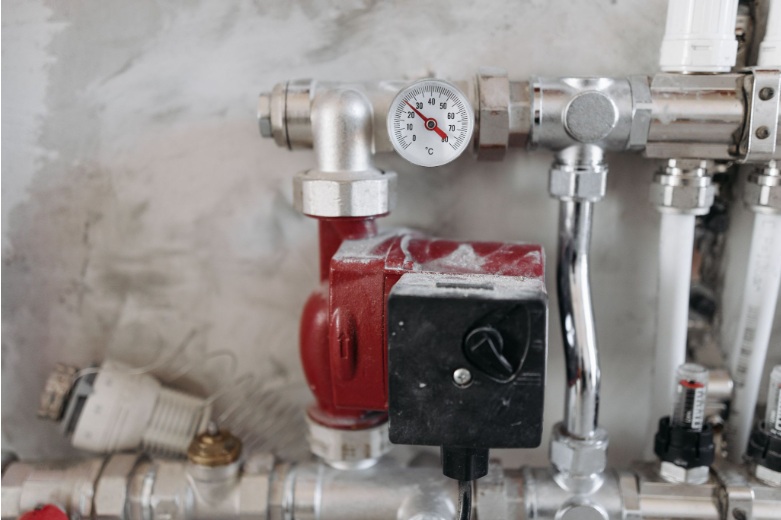
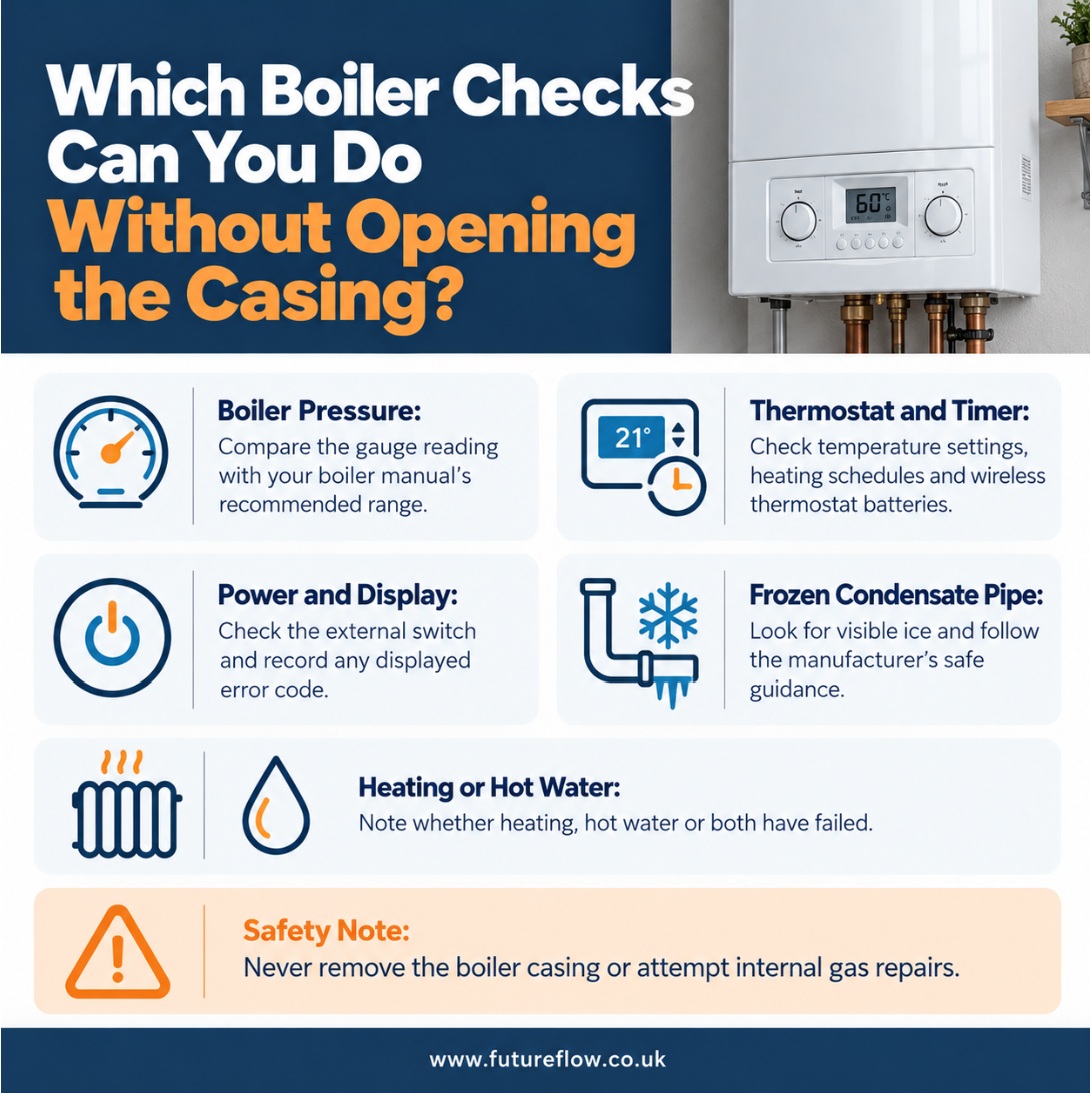
Read the pressure gauge and compare it with the range stated in your manual. Many domestic systems sit around 1–1.5 bar when cold, but the specified range varies. Note repeated pressure changes rather than continually topping up the system.
Checking the Thermostat and Heating Controls
Confirm the thermostat temperature, operating mode and timer schedule. If you use a wireless thermostat, check its batteries where the manufacturer’s instructions allow. Make sure the system has not been switched to off or holiday mode unintentionally.
Checking the Boiler Power Supply and Display
Check the external power switch and consumer unit. If a circuit repeatedly trips, do not keep resetting it. Record any error code on the display so the engineer can identify the reported fault.
Checking for a Frozen Condensate Pipe
In freezing weather, look for visible ice on the external condensate pipe. Follow the manufacturer’s instructions for safe checks; do not dismantle the pipe or use boiling water. Contact an engineer if the blockage persists or the guidance does not resolve the problem.
Checking Whether Heating, Hot Water or Both Are Affected
Note whether heating, hot water or both have stopped working. Record whether the water is cold from the start, turns cold during use or has weak flow. These details can help the engineer narrow down the possible causes.
When Should You Call a Gas Safe Registered Engineer?
Arrange professional help for recurring pressure loss, boiler leaks, repeated lockouts, overheating, ignition faults or persistent unusual noises. Gas boiler repairs must be carried out by an engineer registered and qualified for the specific work. Use the Gas Safe Register’s engineer finder to locate a registered professional and check the relevant work categories on their ID card.
If you smell gas, avoid flames and electrical switches, leave the property and call the National Gas Emergency Service on 0800 111 999 from a safe location. If a carbon monoxide alarm sounds, leave immediately and follow emergency guidance. The National Gas emergency guidance gives the reporting number and safety steps. Do not use the boiler again until it has been confirmed safe.
Landlords also have specific legal duties.
The HSE’s landlord gas safety guidance requires annual gas safety checks on relevant appliances and flues, alongside maintenance of the gas appliances, pipework and flues they provide. A safety check does not replace routine servicing.
For faults that need professional diagnosis, our Heating’s boiler repairs and gas services cover breakdowns, diagnostics, servicing and domestic gas work.
FAQs
What Are the Most Common Boiler Problems?
Common faults include pressure loss, leaks, ignition failures, unusual noises, heating failures and frozen condensate pipes.
Why Does My Boiler Keep Breaking Down?
Recurring failures can indicate unresolved pressure, circulation, control or component faults. An engineer can diagnose the underlying cause.
Can I Fix a Boiler Problem Myself?
You can check external controls, settings and the display. Leave internal boiler and gas repairs to a suitably qualified Gas Safe registered engineer.
How Much Does Boiler Repair Cost in the UK?
Costs depend on the fault, parts, labour and callout arrangements. Request a quote after the engineer identifies the problem.
Is It Safe to Keep Using a Faulty Boiler?
Stop using it if you suspect a gas leak or carbon monoxide exposure. Leave the property and follow emergency guidance.
When Should I Replace My Boiler?
Consider replacement if breakdowns recur, repairs become uneconomical or the boiler no longer meets your heating needs. Ask an engineer to assess its condition first.
Conclusion
Persistent boiler problems can leave your home without heating or hot water, so basic external checks should not delay professional diagnosis when faults recur or safety is in question. Prompt attention can help identify the cause and determine the appropriate repair.
Having trouble with your boiler? Contact us today to discuss the fault and arrange the appropriate support.